
Dr. Maximilian Kasparek as Scientific Director of Congress
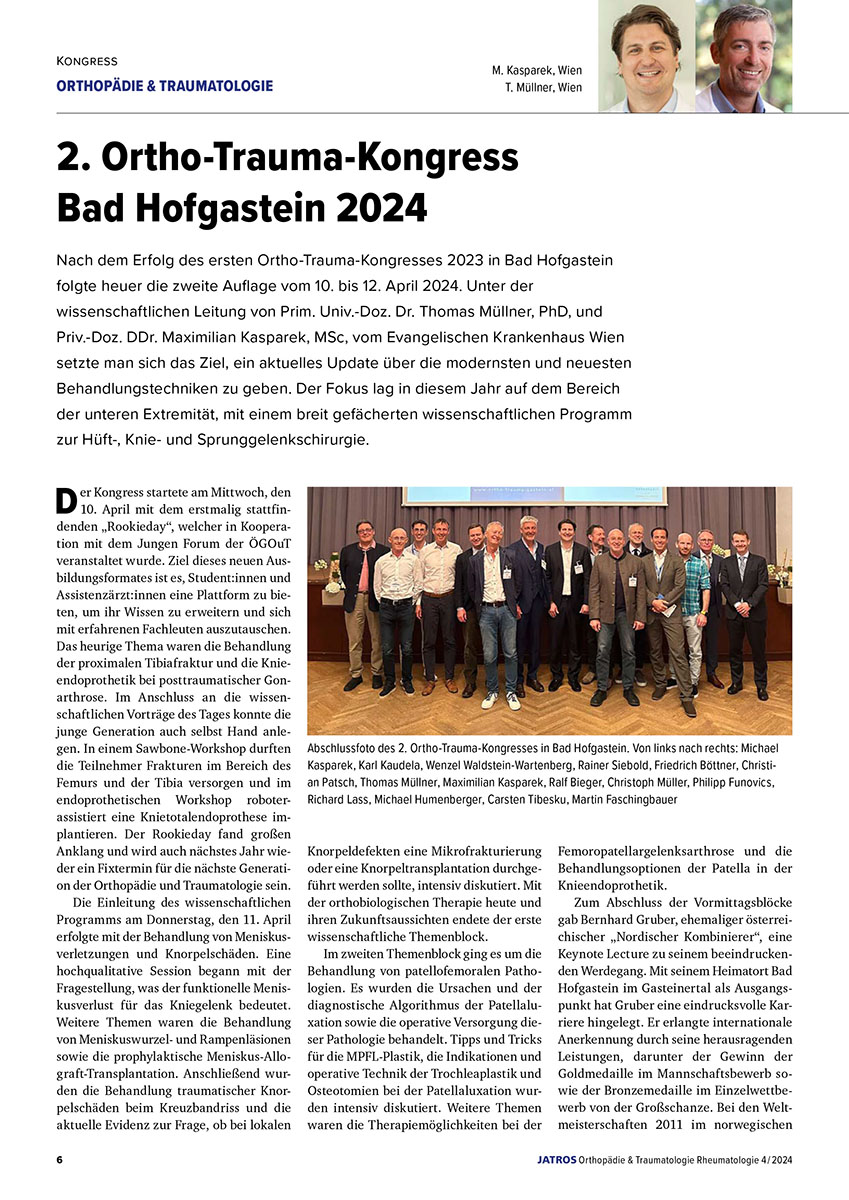
2nd Ortho Trauma Bad Hofgastein 2024
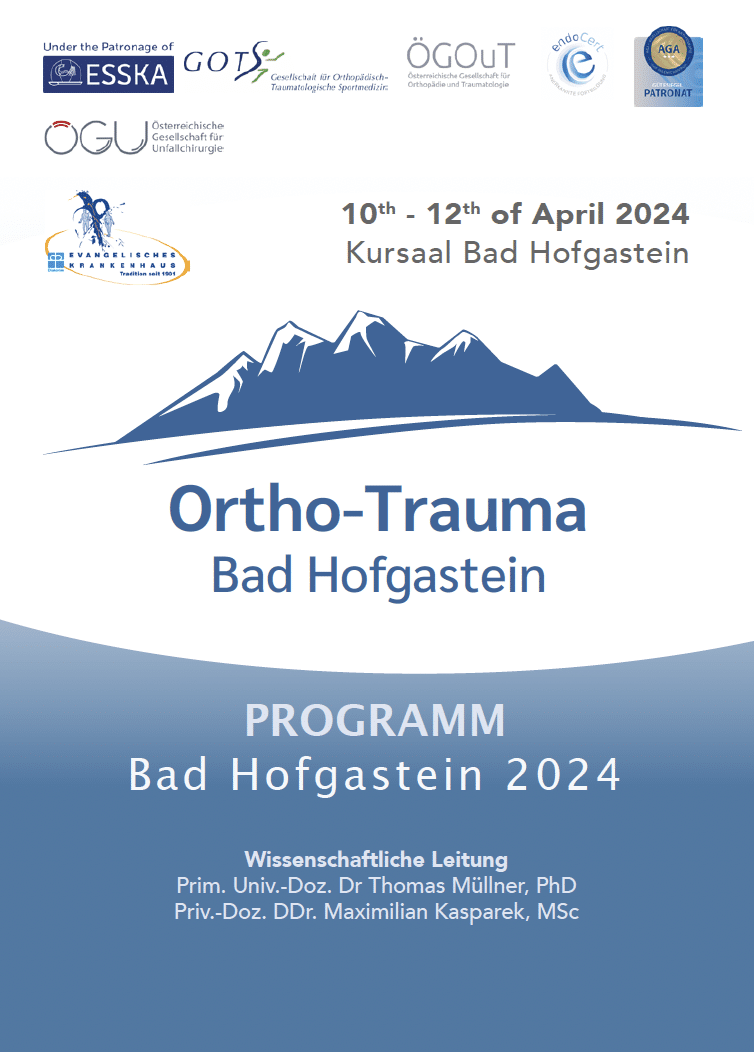
Following the success of the first Ortho-Trauma Congress in 2023 in Bad Hofgastein, the second edition took place this year from April 10 to 12, 2024. Under the scientific direction of Prim. Univ.-Doz. Dr. Thomas Müllner, PhD and Priv.-Doz. DDr. Maximilian Kasparek, MSc from the Evangelical Hospital Vienna, the aim was to provide an up-to-date and interesting update on the most modern and latest treatment techniques. This year’s focus was on the lower extremity, with a broad scientific program on hip, knee and ankle surgery.
The congress started on Wednesday, April 10, with the first-ever “Rookieday”, which was organized in cooperation with the Young Forum of the ÖGOuT. The aim of this new training format is to offer students and assistant doctors a platform to expand their knowledge and exchange ideas with experienced specialists. This year’s topic was the treatment of proximal tibia fractures and knee arthroplasty in post-traumatic gonarthrosis. Following the scientific presentations of the day, the young generation was also able to get hands-on experience. In a sawbone workshop, participants were able to treat fractures in the femur and tibia, and in the endoprosthetic workshop, they were able to implant a robot-assisted total knee arthroplasty. The Rookieday was very well received and will once again be a fixed date for the next generation of orthopedics and traumatology next year.
The introduction to the scientific program on Thursday, April 11, 2024, was the treatment of meniscus injuries and cartilage damage. A high-quality session began with the question of what functional meniscus loss means for the knee joint. Other topics included the treatment of meniscus root and ramp lesions, as well as prophylactic meniscus allograft transplantation. Subsequently, the treatment of traumatic cartilage damage in cruciate ligament rupture and the current evidence on the question of whether microfracturing or cartilage transplantation should be performed for local cartilage defects were discussed intensively. The first scientific topic block ended with orthobiological therapy today and its future prospects.
The second topic block dealt with the treatment of patellofemoral pathologies. The causes and diagnostic algorithm of patellar dislocation as well as the surgical treatment of this pathology were discussed. Tips and tricks for MPFL plasty, the indications and surgical technique of trochleoplasty and osteotomies for patellar dislocation were discussed intensively. Further topics were the treatment options for femoropatellar joint arthrosis and the treatment options for the patella in knee arthroplasty.
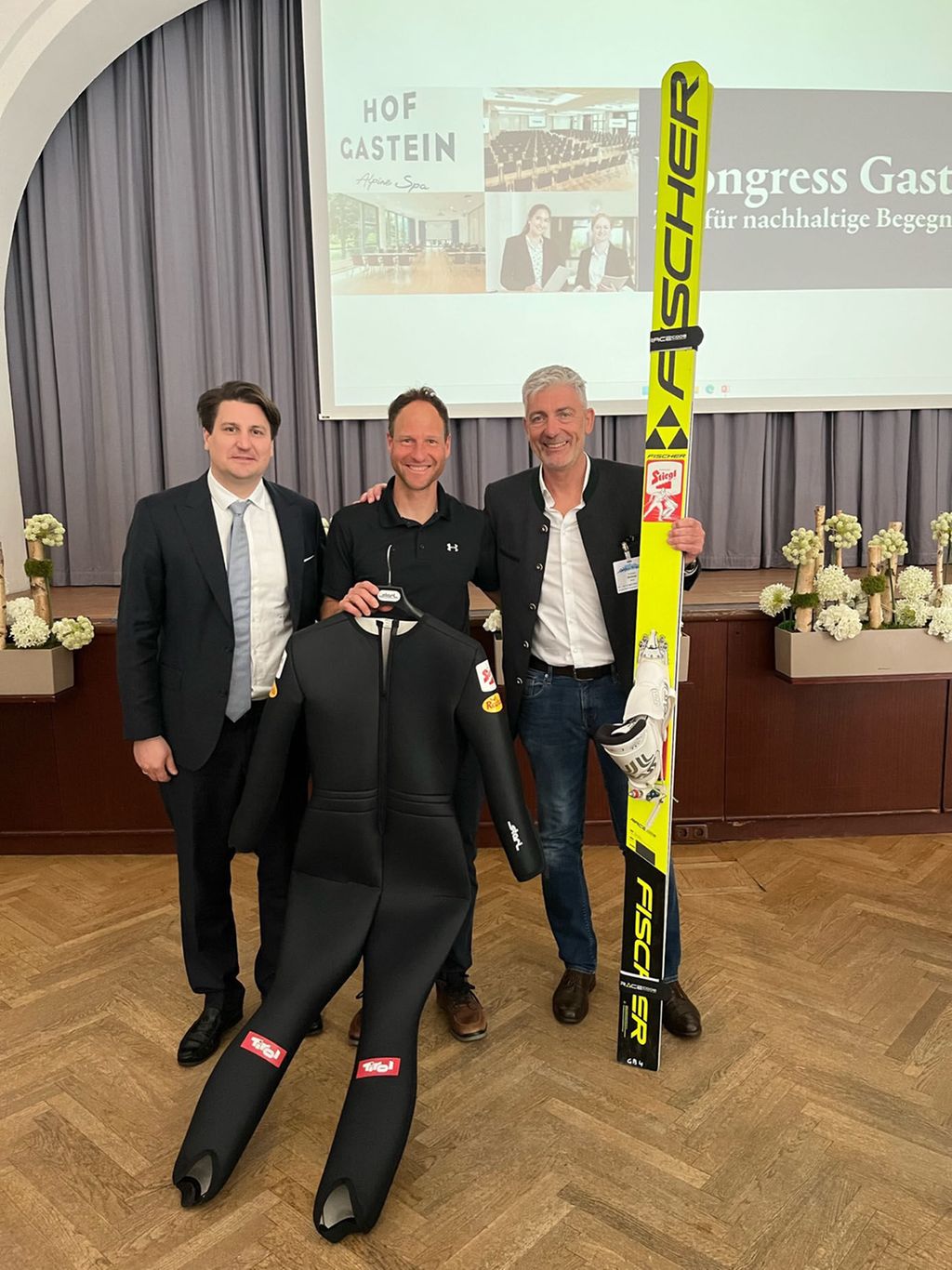
To conclude the morning blocks, Bernhard Gruber, a former Austrian Nordic combined skier, gave a keynote lecture on his impressive career. With his hometown of Bad Hofgastein in the Gastein Valley as a starting point, Gruber has had an impressive career. He gained international recognition through his outstanding achievements, including winning the gold medal at the 2010 Olympic Games in Vancouver as part of the team and the bronze medal in the individual competition from the large hill. At the 2011 World Championships in Oslo, Norway, he won the world title with both Austrian relay teams (normal and large hill). In addition, he crowned his career with the title of individual world champion from the large hill in 2015.
After the keynote lecture and lunch break, during which a lunch symposium was also offered this year, with the opportunity to test an surgical robot, the afternoon session began.
In the afternoon of the first day, hip joint diseases and primary hip arthroplasty were treated. Starting with the topic of unclear hip pain and femoro-acetabular impingement, labrum and cartilage damage as well as the question of what needs to be operated on, exciting discussions developed. This was followed thematically by the treatment of hip joint fractures in winter sports. Further topics were periacetabular osteotomy (PAO) and its current status, dysplasia coxarthrosis as well as complex deformities of the acetabulum and femur and therapy suggestions for the treatment of the same. This exciting topic block ended with the topic of debonding in hip and knee arthroplasty.
The first day concluded with the topic block on current concepts in knee arthroplasty. Both the indication for the medial partial sled and the success factors for this were discussed. In the further course, the first clinical results of the original knee technique, which was developed at the Evangelical Hospital, were presented. The topic moved on to soft tissue releases and the importance of these today. The first day and thus one of the highlights of the scientific session ended with a scientific battle pro and contra robotics in knee arthroplasty. To round off the intensive congress day, an evening event took place in the Weitmoserschlössl, a beautiful, historical location in the Gastein Valley.
The third day of the congress on Friday, April 12, 2024, started with the topic of osteoporosis. This was followed by discussions on spinopelvic alignment in hip arthroplasty and iliopsoas impingement after hip replacement. In the area of complex cases, the application of proximal femur replacement in revision arthroplasty and the options for an unstable hip prosthesis were discussed. Nerve pathologies after hip and knee joint replacement as well as the complex differentiation of adipose tissue tumors were also thematically treated.
The following session dealt with traumatic knee injuries. Questions such as “What to do if my graft is too thin during ACL plasty?” and intraoperative solutions were presented. The session continued with the treatment of medial and lateral instabilities of the knee joint. Solutions for common complications in anterior cruciate ligamentoplasties and re-ruptures were also discussed. The session concluded with news from the field of allografts.
In the keynote lecture of the second day, Michael Strauss, an Austrian freerider, gave the participants an insight into his everyday life as a ski freerider. His talent and passion led him to numerous podium finishes at various contests. His greatest success to date was winning the X‑Over-Ride 2019 on the Kitzsteinhorn in Zell am See-Kaprun. With his extraordinary choice of lines and his creative “Strauss-Line”, which included a backflip, a 360 and a huge double drop over the rock faces, he impressed the jury and prevailed against a strong field of competitors.
After the lunch break and a lunch symposium on the update of knee surgery, the session continued with current treatment options for Achilles tendon pathologies, ankle injuries and ankle arthrosis.
At the same time, there was a block on pre- and postoperative rehabilitation and conservative therapies, in which current possibilities and future trends in physical medicine, “Back to Sports” after anterior cruciate ligament injuries, postoperative mobilization after hip and knee replacement and an update on shock wave therapy were discussed.
In the final block, current trends in knee arthroplasty were discussed and current guidelines and future perspectives of thrombosis prophylaxis were discussed. Further topics were the importance of osteotomy nowadays, alignment strategies in valgus gonarthrosis and the first results of a patient-specific knee prosthesis. To conclude, an overview of the current literature comparing medial and lateral partial sleds and total knee arthroplasty was shown and an attempt was made to answer the question of whether 20% of TKA patients are still really dissatisfied today. To round off the intensive congress, there was a joint dinner in beautiful Bad Hofgastein.
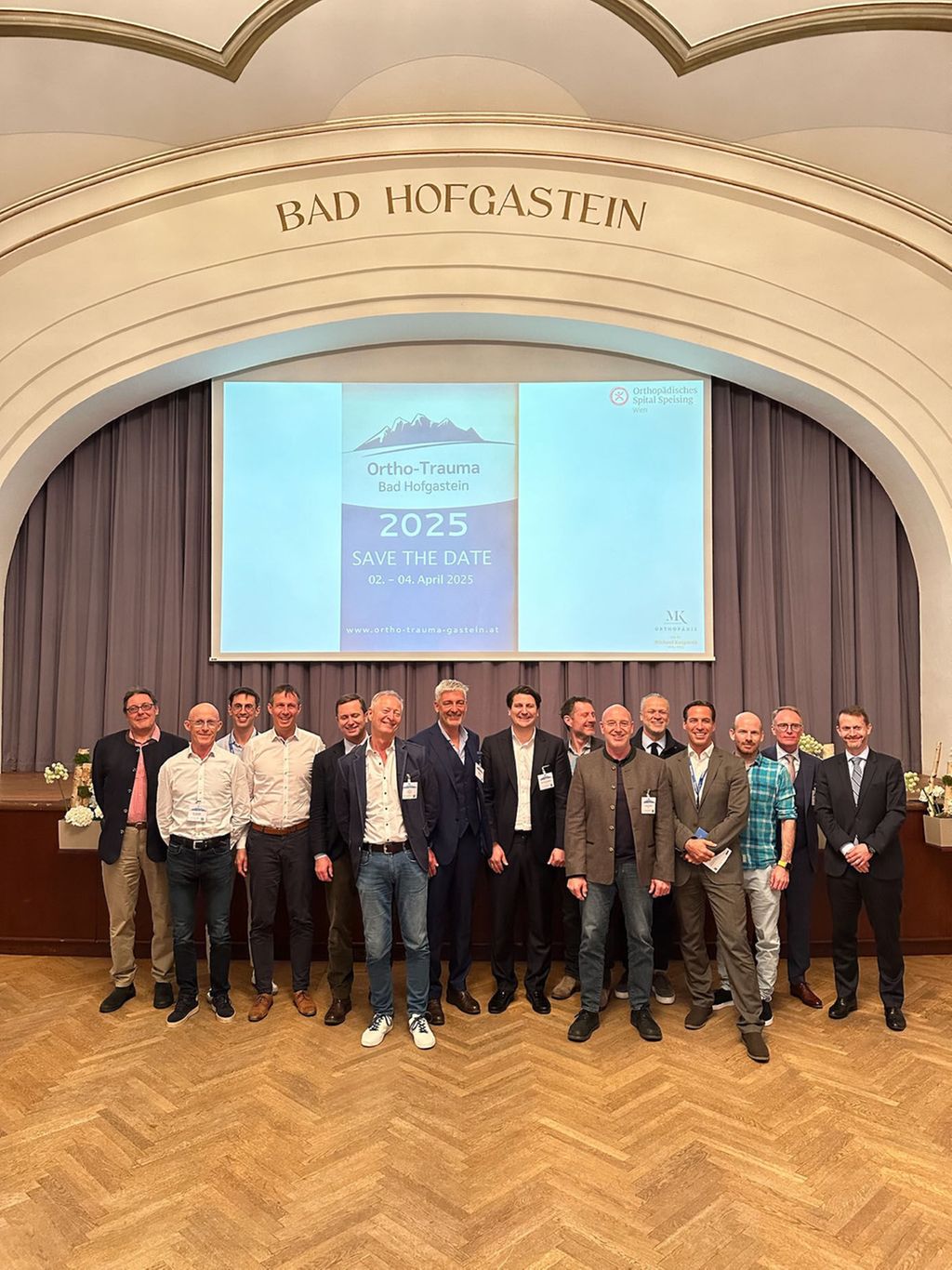
In summary, these were three scientifically highly interesting and informative days with many exciting, high-quality discussions. Due to the great feedback, the third Ortho-Trauma Congress is planned for next year from April 2 to 4, 2025 in Bad Hofgastein.