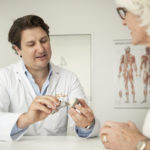


Priv.-Doz. DDr. Maximilian Kasparek as an expert on OE24.TV
Osteoarthritis: A Widespread Disease
Priv.-Doz. DDr. Maximilian Kasparek was invited as an expert on osteoarthritis and its treatment on OE24.TV.
You can watch the full interview with Dr. Kasparek here:
Dr. Maximilian Kasparek, you are a specialist in orthopedics and traumatology. Why are so many people affected by osteoarthritis that it can be called a widespread disease?
Thank you for the invitation. Osteoarthritis can unfortunately be considered a widespread disease, as 15% of those under 60 and one-third of the population over 60 suffer from it, leading to a significant reduction in their quality of life.
Are there any risk factors, or what factors play a role in the development and progression of the disease?
The causes of osteoarthritis are diverse. They range from genetic predisposition, congenital deformities such as hip dysplasia, overuse due to occupation or sport, and long-term consequences of injuries. Increasing age and severe obesity, which increases the risk of hip or knee osteoarthritis four to five times, are also risk factors.
Can you briefly explain when osteoarthritis is diagnosed and how the diagnostic process works?
Our articular cartilage acts as a shock absorber, located in a joint on the two bone ends that form the joint. As we age, the cartilage layer becomes thinner and rougher, and its lubricating ability decreases, almost always leading to normal, age-related wear and tear of the joints over time. When natural wear and tear exceeds the usual age-related extent, it is referred to as osteoarthritis. These signs of wear often remain unnoticed for a long time. Pain and functional limitations of the affected joint often only appear in advanced stages of the disease. Generally, the diagnosis of osteoarthritis consists of a medical history interview, a clinical examination, and an X‑ray examination.
What are the typical symptoms, and what limitations are associated with the disease?
Typical symptoms include load-dependent pain in the affected joint and increasing restriction of movement. Also classic are morning stiffness or start-up pain, which improves after a few steps. In later stages, joint swelling, as well as rest and night pain, up to constant pain, occur, leading to a significant reduction in the quality of life for affected patients.
Is osteoarthritis a disease that only occurs in old age, or can younger people also be affected?
Unfortunately, younger patients can also be affected. These individuals usually have a genetic predisposition and report that their mother or father had already suffered from osteoarthritis, as well as after a severe joint injury.
Is there anything that can be done preventatively to protect and maintain one’s joints?
Basically, everyone can contribute to preventing the onset or progression of osteoarthritis. Regular exercise is important, with joint-friendly sports such as cycling or swimming being particularly recommended. A balanced diet and, above all, avoiding overweight are also important components in osteoarthritis prevention.
It is categorized into various degrees of severity. Does timely diagnosis also play a role in treatment success?
Osteoarthritis is divided into four degrees of severity, and timely diagnosis is naturally important, as it allows for protective interventions such as lifestyle modification (e.g., weight loss and exercise therapies) to slow down the further progression of osteoarthritis. Unfortunately, it must be noted that osteoarthritis cannot be cured, and one can only slow down the progression of wear and tear.
What treatment options are generally available, from conservative approaches to artificial joints, as a last resort?
Treatment depends on the stage of wear and tear as well as the symptoms. On the one hand, non-pharmacological therapies are available, such as exercise therapy, weight reduction, and physiotherapy for muscle building. Pharmacologically, we have the group of NSAIDs, which primarily have an anti-inflammatory and pain-relieving effect, especially in cases of inflammation signs such as joint swelling. Additionally, intra-articular injections, i.e., infiltrations with cortisone, autologous blood, or hyaluronic acid, can be used. Generally, all these therapies and measures are more successful the earlier they begin. The goal is to relieve pain and preserve or improve joint function.
If conservative therapies no longer provide sufficient pain relief due to the advanced stage of the disease, then there is an indication for an artificial joint replacement.
If joint replacement becomes necessary, where and how is the procedure performed?
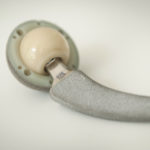
I personally work at the Evangelical Hospital in Vienna, where I personally care for my patients. In other words, my patients are personally accompanied by me through the operation and rehabilitation. We routinely use the most modern minimally invasive surgical techniques. In the area of artificial hip joints, the AMIS method, which is one of the most modern, muscle-sparing surgical techniques, enables rapid rehabilitation and the best possible joint function can be achieved. The great advantage of the AMIS method is that during the implantation of the artificial hip joint, no muscles, tendons and nerves have to be cut on the way to the hip joint, but only held away to the side. As a result, all hip muscles remain fully functional and this enables particularly rapid rehabilitation.
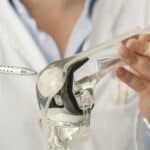
In the area of artificial knee joint replacement, we now take individual anatomy into account and, with the more modern surface prostheses, we can enable our patients to live a life with high activity and without pain again.
Many of my patients forget that they have an artificial hip or knee joint and practice their favorite sports as before the arthrosis disease. Many of my patients are also enthusiastic skiers and full of joy that skiing and even deep snow skiing are now possible again without pain with an artificial joint. This also applies to many other popular sports.
What is your personal treatment approach?
It is personally important to me to advise and treat each patient individually according to their needs in order to enable my patients to live a life without pain and movement again. Personal care is particularly important to me. In other words, if an operation is necessary, I personally accompany my patients from the initial consultation to rehabilitation.
Do you often see patients coming to you very late because, for example, they think it is normal for the joints to start hurting in old age?
Unfortunately, we often see this and patients often suffer greatly from arthrosis. Not only from the pain, they are restricted in their everyday life and can no longer do many things, even though they could be helped well. That is why it is important to see an orthopedist for complaints and pain and have yourself examined. Because the earlier a therapy begins, the more can be achieved.
What advice or words of encouragement can you give our viewers at this point?
If you have complaints and pain with your joints, see an orthopedist in good time. Because as the arthrosis progresses, the complaints continue to increase and the sooner you start therapy, the more you can achieve.