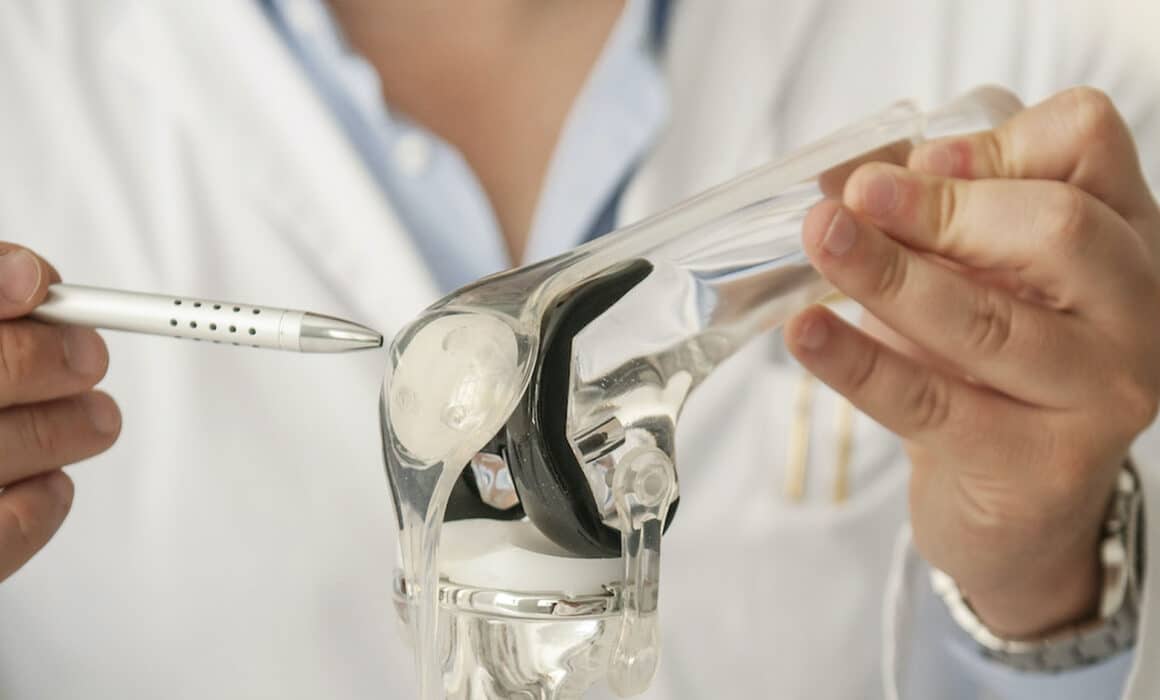
Partial Knee Replacement vs. Total Knee Arthroplasty
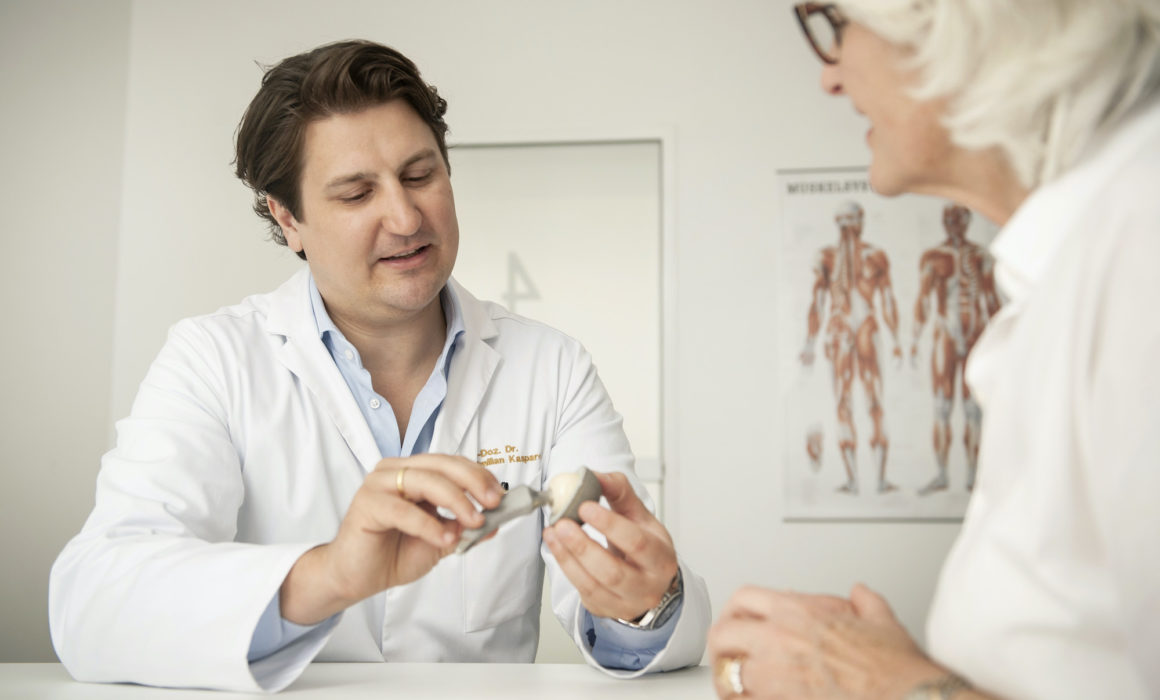
Interview with Priv.-Doz. DDr. Maximilian Kasparek, MSc
Many patients are faced with the question: partial knee replacement or total knee arthroplasty? Both options have advantages and disadvantages – and the decision depends on individual factors. A conversation with Dr. Kasparek clarifies what truly matters.
After an ACL tear, your athletic future is determined not by chance, but by the correct therapy.
1. What exactly is a partial knee replacement and how does it differ from a total knee arthroplasty?
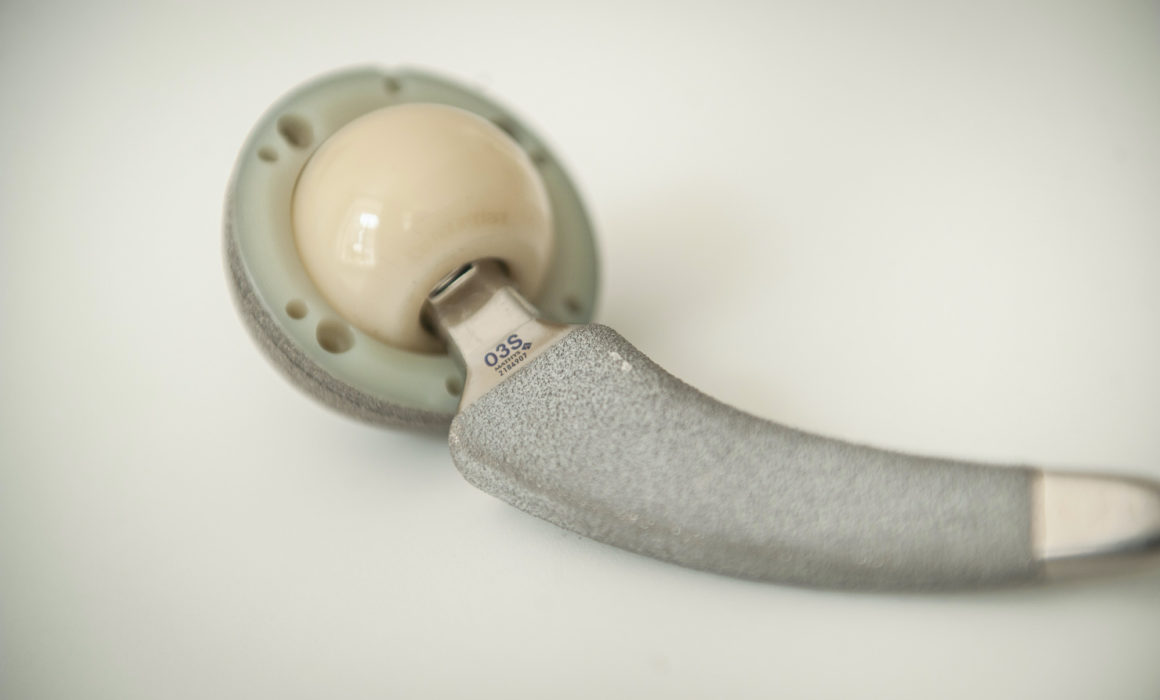
A partial knee replacement (often also called a “unicompartmental prosthesis”) replaces only a portion of the knee joint, such as the inner or outer compartment. With a total knee arthroplasty (total endoprosthesis), the entire joint is replaced – all compartments. The main difference lies in how many healthy structures are preserved. The partial knee replacement is less invasive, often has a shorter operating time, and potentially faster recovery – but it is not suitable for every knee condition and every form of osteoarthritis.
2. When do you recommend a partial knee replacement, and when is a total knee replacement the better choice?
I weigh several factors: the extent of the osteoarthritis, how many compartments are affected, how stable the joint is, and how active the patients are. If only one compartment is affected, there is little to no malalignment, and the other parts of the cartilage and knee are healthy, then a partial knee replacement is ideal. In cases of advanced joint degeneration in multiple compartments, unstable joint guidance, or a severe degree of deformity, total knee arthroplasty is often the safer and long-term better choice.
3. How do the rehabilitation process, mobility, and everyday experience differ between partial and total knee replacement?
Patients with partial knee replacements often experience a gentler start: less tissue trauma, less postoperative pain, often shorter hospital and rehabilitation times. This allows them to regain confidence in the knee more quickly and resume daily activities and light sports earlier. A total knee replacement generally offers significant pain relief and stability – but usually with a longer rehabilitation process and more structured recovery.
4. Are there technical innovations that are particularly relevant for partial knee replacements?
Yes, definitely. Robot-assisted systems are a major topic: they help to position the implant precisely – especially important for partial knee replacements, because even minor misalignments have a greater impact. Navigation procedures and minimally invasive approaches also play a role in preserving the surrounding tissue as much as possible.
5. How long does a partial knee replacement typically last – and what is the process for converting to a total knee replacement, if necessary?
With good surgical technique, consistent aftercare, and appropriate patient selection, partial knee replacements can last 10–20 years or longer. If a total knee arthroplasty becomes necessary later, it is usually feasible – however, the operation can be more complex, as tissue and bone conditions are altered. It is important that the conversion is well-planned.
6. What are the specific limitations or risks associated with partial knee replacements?
A partial knee replacement is not suitable for every knee. If the osteoarthritis later spreads to other areas of the joint, discomfort may occur again. A partial knee replacement is also not the ideal solution for misalignments or severe instability. The technique is more demanding, requiring precise planning and experience in its application. With the right indication and surgical technique, very good results can be achieved, but the selection must be made carefully.
7. How do you advise patients regarding sports after a partial knee replacement vs. a total knee replacement?
I place great emphasis on realistic expectations. With a partial knee replacement, joint-friendly sports are often possible sooner: swimming, cycling, Nordic walking, etc. A total knee replacement often allows for sports as well, but the return requires time, good muscular stability, and medical clearance. Strength training, balance exercises, and targeted function tests are crucial in this process.
8. Which approach or surgical technique do you recommend – and in which cases?
Robot-assisted knee surgery is frequently used for the knee – especially for partial knee replacements – to minimize potential sources of error. For total endoprostheses, I place great emphasis on minimally invasive approaches, precise alignment, and the appropriate implant selection. The surgical approach is always chosen individually – depending on the patient’s anatomy and accompanying conditions.
In recent years, we have therefore developed the original knee technique for total endoprostheses. This innovative surgical technique, which Prim. Univ.-Doz. Dr. Thomas Müllner, PhD and I have developed together, reconstructs the individual biomechanics and anatomy of the knee before the osteoarthritis and thus enables a more natural knee feeling after the operation.
9. How do age, weight, or comorbidities influence the decision?
Age alone is not an exclusion criterion. A healthy, active 75-year-old can be an excellent candidate for a partial or total knee replacement. Weight and comorbidities are more important: severe obesity puts additional stress on the joint and can increase the risk of complications. Before the surgery, I often work with patients on weight reduction and muscle strengthening to improve the chances of success.
10. What advice would you give to patients who are facing the decision between a partial knee replacement and a total knee replacement?
Rely on a thorough diagnosis and individual planning. My task is to work with you to select the prosthesis that will give you the best quality of life – long-term, safely, and stably. Whether partial or total knee replacement: The decision depends not only on the X‑ray, but on the person. That’s why it’s important to me to invest time, clarify questions, and provide information – so that you can make a decision with a good feeling.
Conclusion: Partial knee replacement or total knee replacement? An overview comparison:
| Characteristic | Partial knee replacement | Total knee replacement |
|---|---|---|
| What is replaced? | Only part of the knee joint (one compartment) | The entire knee joint |
| Surgical effort | Smaller procedure, minimally invasive | More extensive procedure |
| Rehab time | Often shorter, faster mobilization | Slightly longer rehab phase |
| Mobility | Very good mobility, often more natural feeling | Very good stability, lower risk of long-term consequences |
| Limitations | Not suitable for advanced osteoarthritis | Can also be used for complex damage |
| Long-term results | Very good with correct indication | Very good with careful planning and rehab |
| Sport & everyday life | Many activities possible again, especially joint-friendly | Also good return to everyday life and sport possible |
| Disadvantage | Risk of osteoarthritis in other joint parts | Higher tissue effort during the procedure |
If you enjoyed this article, you might also be interested in other posts from our blog.