
Custom, Tailored Knee Prosthesis
Modern Knee Replacements – Why Customization Is So Important Today
Modern knee replacement surgery has advanced significantly in recent years. Whereas in the past the same standard alignment was used for nearly all patients, today the focus is increasingly on individualized treatment plans.
Today, state-of-the-art navigation systems, computer-assisted precision technologies, and modern surgical robots make it possible to tailor procedures much more precisely to each individual’s unique anatomy. The goal is to restore the knee joint as naturally as possible and achieve a harmonious sense of movement.
Dr. Maximilian Kasparek has been conducting extensive research on personalized knee replacements for many years and, together with Prim. Univ.-Doz. Dr. Thomas Müllner and his research team, published recent clinical data in the Journal of Clinical Medicine (JCM). In the following interview, he explains in layman’s terms the advantages modern technologies offer, for whom they are suitable—and where their limitations lie.
An interview with Priv.-Doz. DDr. Maximilian Kasparek, MSc
Custom Knee Replacements Explained in Simple Terms
“Every knee is different—and that’s exactly what we’re taking into account today”
Dr. Kasparek, what exactly is meant by a “custom knee replacement”?
In the past, knee replacements were usually performed according to a highly standardized procedure. The goal was almost always a perfectly straight leg—regardless of whether the patient originally had bowlegs or knock-knees.
Today, however, we know that every person has a unique knee anatomy. The leg axis, joint line, and ligament tension often vary significantly from person to person.
A modern, customized knee replacement therefore means, above all, a personalized treatment plan. Our goal is to restore the knee as closely as possible to the condition it was in before osteoarthritis set in.
Modern navigation systems, computer-assisted precision technologies, state-of-the-art surgical robots, and precise planning systems help us achieve this.
Is this a custom-made prosthesis?
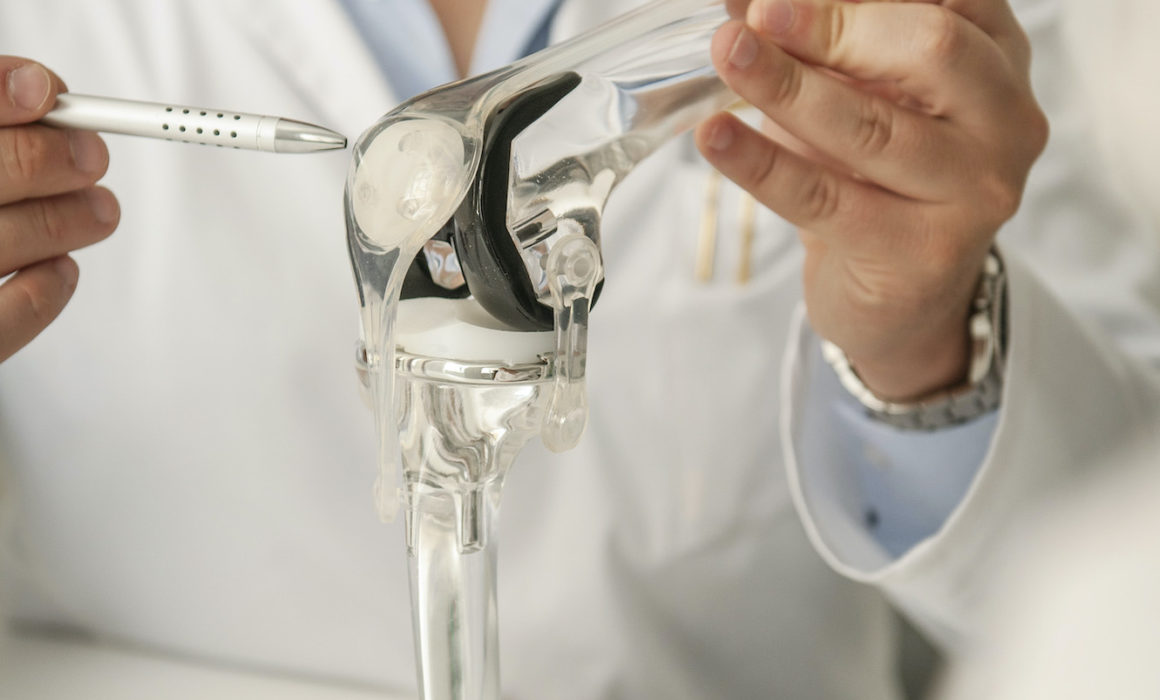
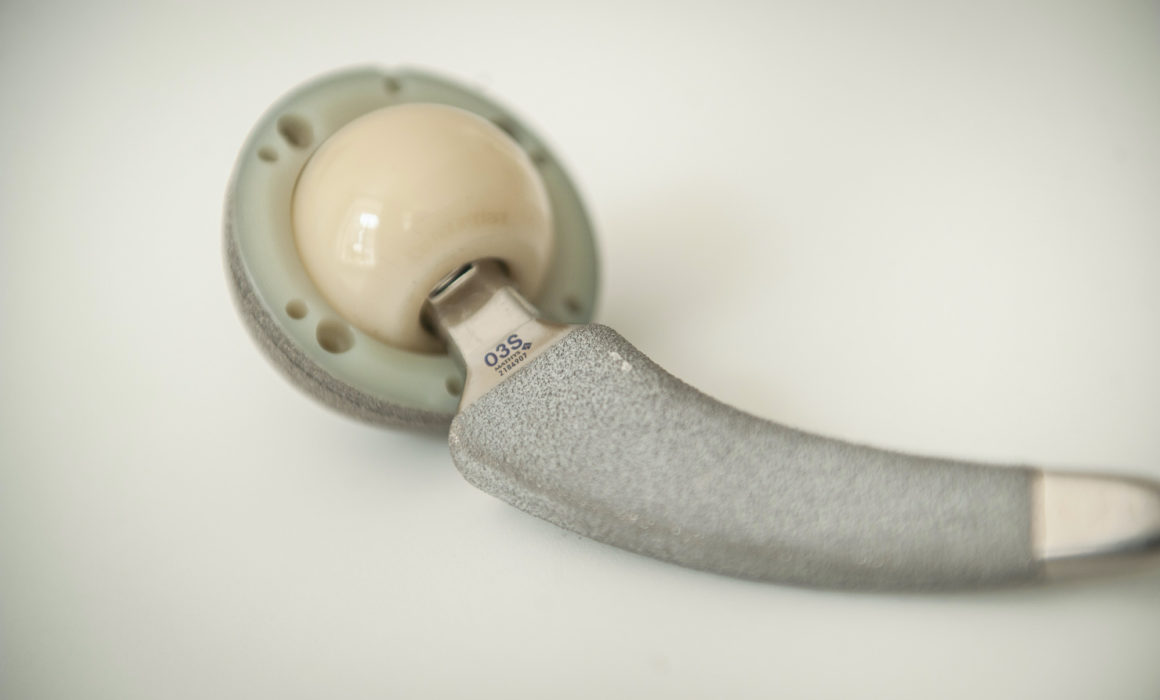
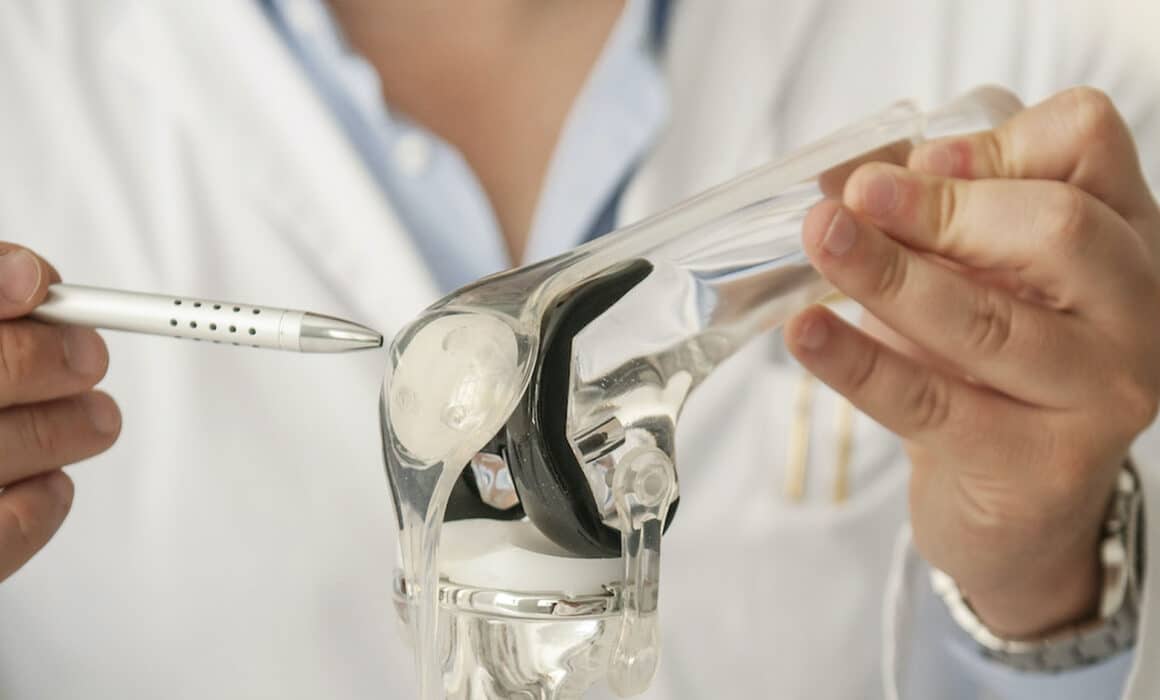
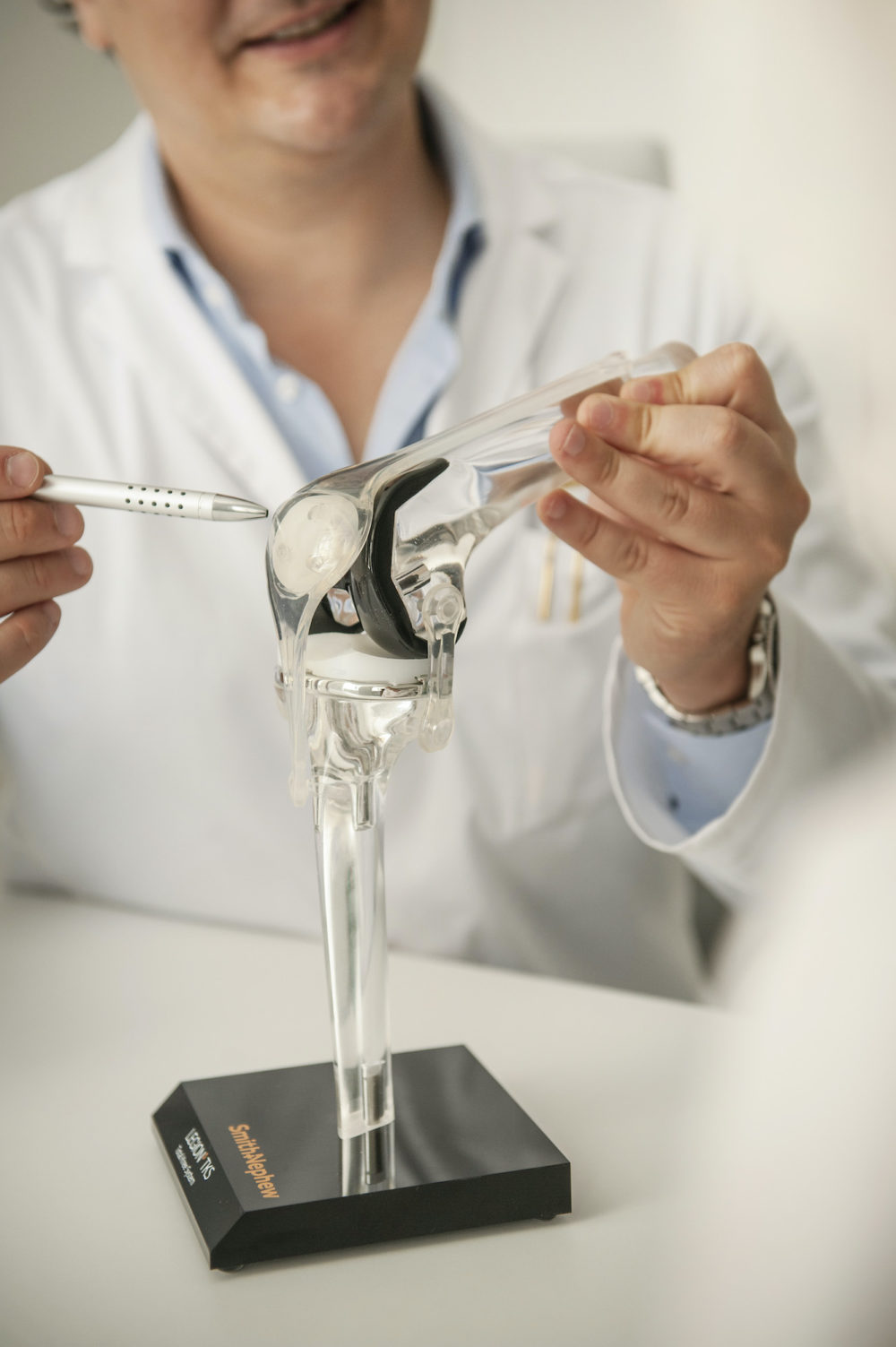
Not necessarily. We usually use tried-and-true standard implants, which are, however, very precisely adapted to the patient’s individual anatomy.
What matters most is not so much the prosthesis itself, but rather the individualized planning and precise positioning.
Thanks to modern navigation systems, computer-assisted precision technologies, and state-of-the-art surgical robots, we can now reconstruct the natural leg axis, joint line, and ligament tension with much greater accuracy than in the past.
Difference from a traditional knee replacement
What is the most important difference compared to the traditional knee replacement?
The biggest difference lies in the philosophy.
In the past, attempts were made to align every knee according to the same pattern. Today, we focus more on the patient’s original anatomy.
The goal isn’t simply a “straight leg,” but a knee that feels as natural as possible.
Many patients say after surgery:
“I hardly ever think about my artificial knee in my daily life.”
That is exactly what the so-called “Forgotten Joint Score” describes—a scientific measure of how natural an artificial joint feels.
Does the difference relate more to the planning or to the surgery itself?
Both.
Modern knee replacement begins even before surgery with a very detailed analysis of the patient’s individual anatomy.
During the surgery, state-of-the-art navigation systems and surgical robots help us achieve the planned position with extreme precision.
As a result, we often need to make significantly fewer adjustments to the ligaments than in the past, when the leg was frequently positioned in an unnaturally straight alignment. This makes the procedure less invasive in many cases.
Does this also change the implantation procedure itself?
Yes.
With the traditional technique, standardized bone cuts were frequently performed.
In modern kinematic or functional alignment, we focus more on the patient’s natural anatomy. The bone cuts are customized for each patient.
This helps preserve the natural tension of the ligaments, the axes of movement, and often the sensation of movement as well.
What are the benefits of modern navigation and surgical robots?
What practical benefits do you see?
In my opinion, the most important benefit is the more natural feeling in the knee.
Many patients report that their knee feels more stable, more balanced, and less “artificial.”
In addition, we often observe:
- faster mobilization
- less stress on the soft tissues
- fewer procedures on the ligaments
- greater mobility
- more confidence in the knee
- greater satisfaction in everyday life
Scientific studies also show improvements in function, activity, and patient satisfaction.
Is the main concern here accuracy, fit, or protecting the soft tissues?
Actually, it’s about everything.
As we found in our study, modern navigation and computer-assisted precision technologies now enable a very high degree of accuracy during implantation.
For patients, this often means:
- precise positioning
- less unnecessary strain
- fewer procedures involving ligaments and soft tissues
- often a faster recovery
Do patients really notice a difference?
A lot of them, yes.
People who are particularly active or patients with high functional demands often report a more natural feeling of movement.
Many people are once again able to walk longer distances in their daily lives, climb stairs more easily, or even resume exercising.
Of course, every knee replacement is still an artificial joint. Our goal, however, is to make it feel as little like one as possible.
Who is a good candidate for a custom knee replacement?
Are there also situations in which traditional care is appropriate?
Yes.
In cases of severe ligament instability, complex prior surgeries, or certain misalignments, a decision must be made on a case-by-case basis as to which technique is most appropriate.
It’s important to note that not every modern technology is automatically the best solution for every patient.
Experience, careful planning, and choosing the right method remain crucial.
Treatment Process
What exactly does the treatment involve?
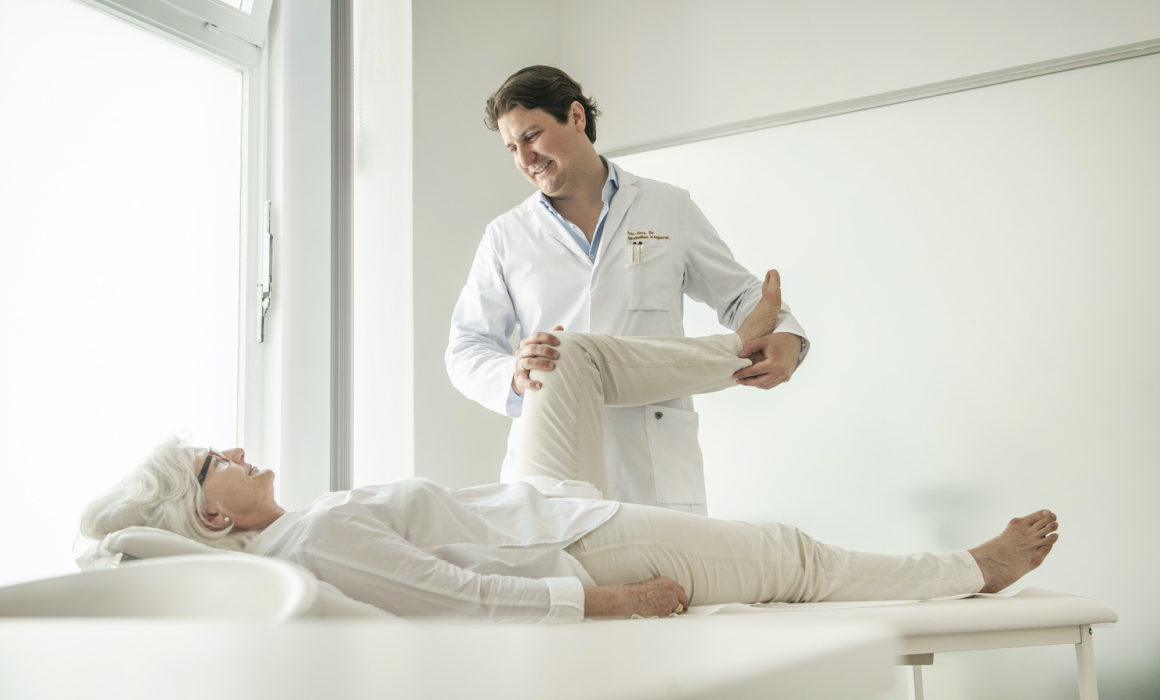
First, a thorough examination is conducted using radiological imaging.
In doing so, we analyze, among other things:
- Leg axis
- Joint Line
- Belt Tension
- individual anatomy
This is followed by precise surgical planning.
During surgery, we use state-of-the-art navigation systems and surgical robots to achieve the planned positioning as precisely as possible—much like a GPS system for the surgeon.
Is the procedure for patients different from that of a standard surgery?
For patients, usually very little.
The differences mainly concern planning and precision during the operation.
The goal always remains the same:
a safe surgery, as little pain as possible, and a quick return to mobility.
Scientific Findings and Experience
What has been your own experience with this technique?
Very positive.
We often see high levels of satisfaction and a very natural feeling of movement.
It is particularly interesting that many patients are much less aware of their artificial knee in everyday life.
Our scientific data also show improvements in:
- Pain
- Function
- Activity
- Quality of Life
- Patient Satisfaction
What were the findings of the published study?
The results after about a year were very promising:
- Significant improvement in the Forgotten Joint Score
- significantly higher activity levels in daily life
- exceptionally high surgical precision
The combination of high precision and high patient satisfaction was particularly important to us.
An Honest Assessment from a Medical Perspective
Is the term “custom knee replacement” medically accurate?
Partially.
The term is often used in a simplified way.
Actually, it’s less about a “special prosthesis” and more about a customized reconstruction of the knee joint.
Today, modern technology allows us to tailor our approach much more precisely to a patient’s individual anatomy.
How do you explain the difference to patients?
I always tell my patients quite frankly:
A modern knee replacement can improve many things—but it does not fully replace a natural knee.
The major advance is that we can now work in a more personalized, precise, and gentle manner than we could in the past.
As a result, many modern knee replacements feel more natural and often function better in everyday life.
But even modern methods have their limits.
What are some common misunderstandings?
Many people believe that a modern knee replacement is automatically fully customized.
In reality, precise, individualized planning is often more important than the prosthesis itself.
Another misconception is that modern surgical robots or navigation systems replace surgeons.
That’s not true.
Technology is an important tool—but experience, expertise, and careful planning remain crucial.
Conclusion: Modern knee replacements mean greater customization
Customized knee replacements, which utilize advanced navigation systems, computer-assisted precision technologies, and modern surgical robots, represent a major advance in knee replacement surgery.
The focus is no longer on a one-size-fits-all solution for all patients, but rather on restoring each patient’s individual anatomy as naturally as possible.
Recent scientific data show:
- high precision
- high patient satisfaction
- more physical activity in daily life
- a more natural feeling in the knee
At the same time, the following applies: “
” Even modern technologies must be evaluated critically. Long-term data will show in the coming years which benefits will endure over the long term.
However, there are already many indications that personalized knee replacement is an important step toward more natural and patient-friendly knee surgeries.
Custom Knee Replacement in Vienna
The decision to undergo knee replacement surgery should always be made on an individual basis. At my private practice in Vienna, I take the time to conduct a thorough evaluation and provide personalized treatment recommendations. Modern, personalized knee replacement surgery makes it possible to tailor the procedure as precisely as possible to your anatomy, your symptoms, and your mobility goals.
Schedule your appointment now for a personal consultation.
If you enjoyed this article, you might also be interested in other posts from our blog.