
Hip & knee joint replacement (prosthesis) for osteoporosis
The answer is reassuring:
Yes – joint replacement is also very possible with osteoporosis.
However, the treatment differs significantly from standard cases.
Successful treatment requires:
- customized implant selection
- Special surgical techniques
- Targeted preparation of the bone
Osteoporosis and prosthesis: what changes in the bone
Osteoporosis causes the bone to lose density and stability. The fine inner structure (trabeculae) is thinned out – the bone appears “porous”.
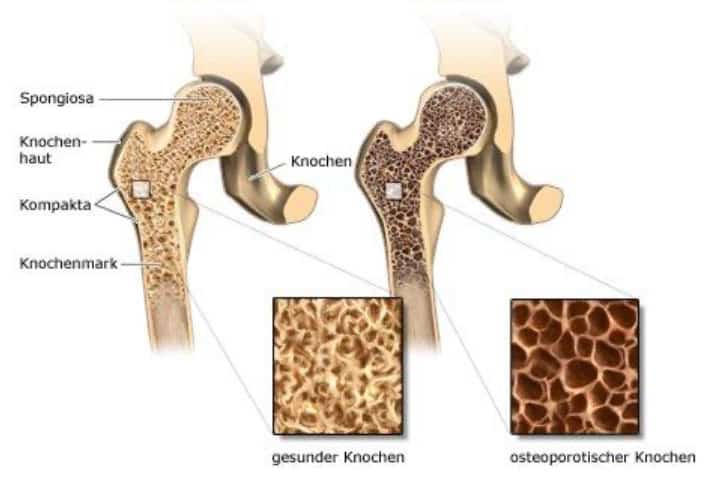
In concrete terms, this means joint replacement:
- Anchoring a prosthesis is technically more demanding
- the transmission of force in the bone must be controlled in a targeted manner
- the risk of loosening or periprosthetic fractures is increased
This is why the individual strategy for joint replacement is crucial. Anchoring must be planned with particular care. Standard solutions often do not work as well here as with healthy bone.
How to anchor a prosthesis stably in osteoporosis
The decisive difference lies in the technology.
In many cases, a cemented prosthesis is used for osteoporosis. The bone cement connects the implant and bone directly and ensures a stable initial situation – a great advantage, especially in the case of porous bone.
Cement-free prostheses that grow into the bone can only be considered if the bone structure is still sufficiently stable. This is assessed precisely in advance.
The implant strategy can also be adapted. Longer stems or special shapes help to distribute the load better in the bone and relieve individual weak points.
Hip prosthesis for osteoporosis: special features
In hip joint replacement, the femur is particularly critical.
Important points:
- Increased risk of intraoperative fractures
- Choosing the right socket shape is crucial
- Frequently cemented fixation
The cup anchorage in the pelvis must be precisely adjusted, as the bone quality may also be reduced here.
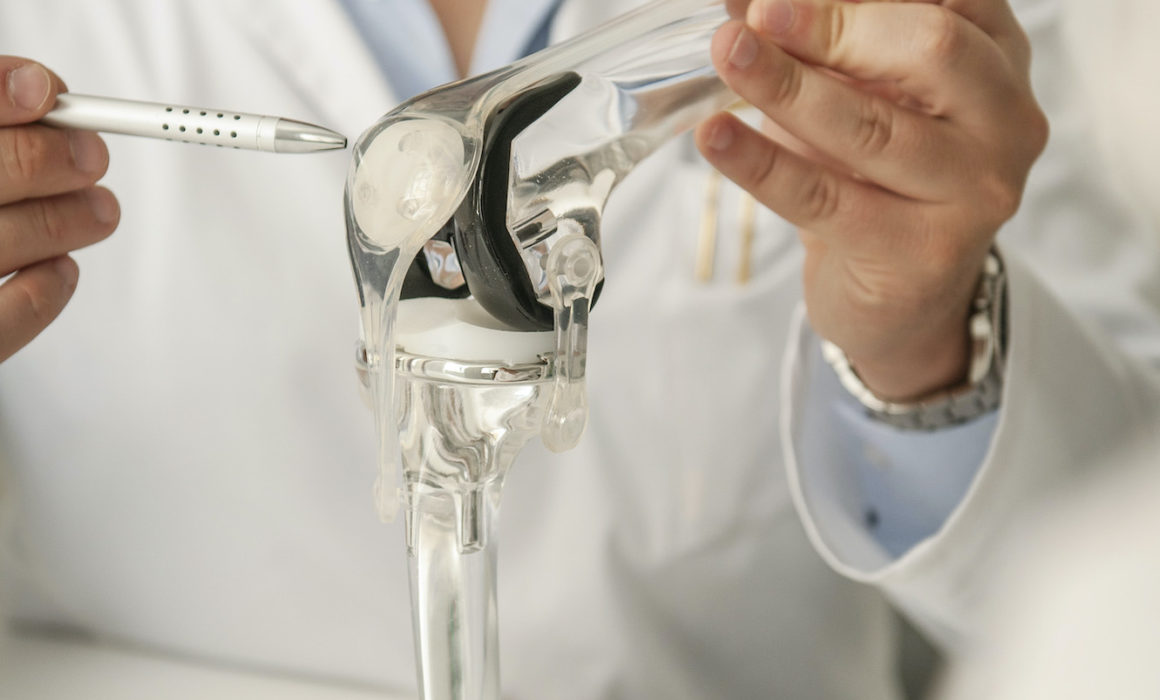
Knee prosthesis for osteoporosis: focus on stability
In addition to the bone, ligament guidance also plays a major role in knee joint replacement.
Special features of osteoporosis:
- Weaker bones in the thigh and lower leg area
- Increased requirements for implant anchoring
- Use of stabilizing prosthesis types if necessary
Goal: a stable, well-guided joint despite reduced bone quality
Before prosthesis surgery: specifically consider osteoporosis
For patients with osteoporosis, the actual treatment does not just begin in the operating theater. Optimizing bone quality already plays an important role beforehand.
Above all, this includes targeted drug therapy, if this has not yet been carried out. Adequate vitamin D levels and a good calcium supply are also essential for bone metabolism.
In addition, moderate muscle training before the operation can help to improve stability after the procedure. Good preparation often has a direct effect on the healing process.
After prosthesis surgery: special features of osteoporosis
Even after joint replacement, there are some points that should be paid particular attention to in the case of osteoporosis.
Mobilization takes place early, but in a controlled manner andadapted to the individual situation. The aim is to encourage movement without putting unnecessary strain on the bone.
Another key aspect is fall prevention. As osteoporotic bones are more sensitive, a fall can have more serious consequences than in healthy patients. Targeted balance and coordination training is therefore very important.
Last but not least, the treatment of osteoporosis should be continued consistently in order to ensure the long-term stability of the bone.
Experience is crucial for joint replacement in osteoporosis
An artificial joint for osteoporosis is not a standard operation.
It requires a good understanding of bone quality, experience in implant selection and a clear concept for the entire treatment.

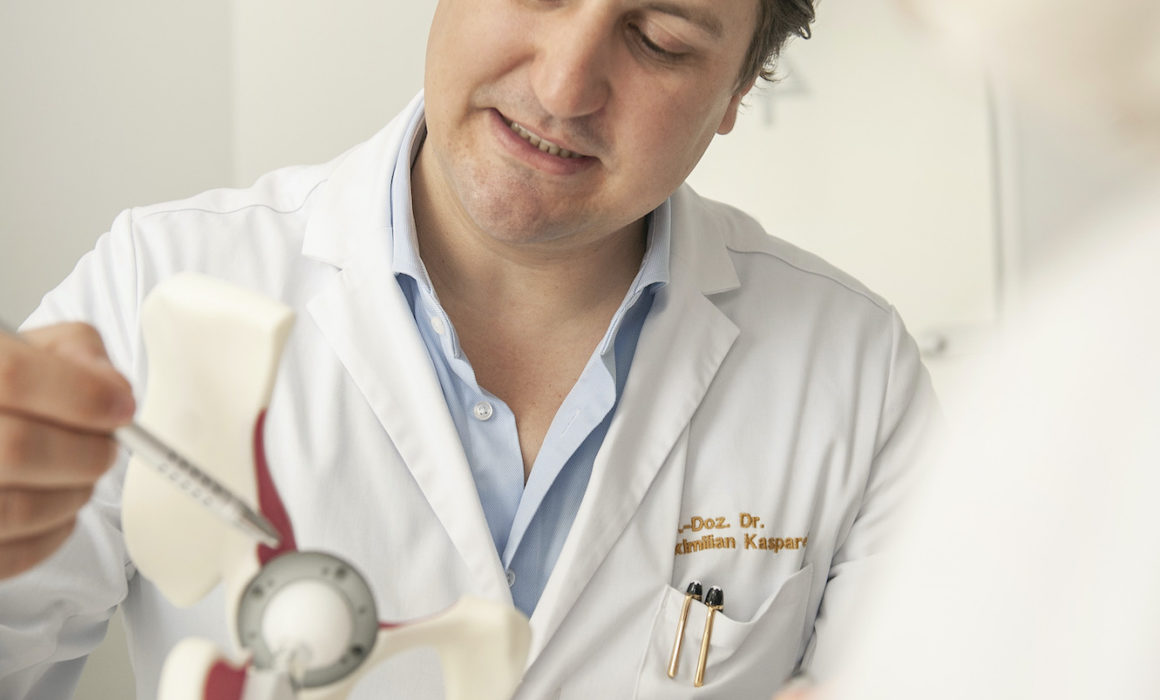
Dr. Maximilian Kasparek specializes in the use of hip and knee prostheses and also regularly treats patients with limited bone quality.
His approach is deliberately individual:
Not every prosthesis fits every bone. The decisive factor is the combination of precise planning, suitable technology and treatment that is geared towards long-term stability.
Especially with osteoporosis, this experience makes all the difference.
Conclusion: Joint replacement for osteoporosis – easy to plan and successful
Today, an artificial hip or knee joint is also a reliable treatment option for osteoporosis.
With the right preparation, an adapted surgical technique and structured aftercare, very good results can be achieved in most cases.
Frequently asked questions (FAQ)
Is joint replacement safe for osteoporosis?
Yes, an artificial hip or knee joint can also be safely implanted in patients with osteoporosis. It is crucial that the surgical technique is adapted to the reduced bone quality and that the anchoring of the prosthesis is carefully planned.
Does a prosthesis hold in osteoporotic bone?
In most cases, yes. A stable connection between the bone and prosthesis can be achieved through the targeted use of bone cement or adapted implants. The individual bone quality plays an important role here.
Is the risk of complications higher?
The risk may be slightly higher, especially for loosening or fractures around the prosthesis. However, with experience, modern technology and good preparation, this risk can be significantly reduced.
Which prosthesis is used for osteoporosis?
Cemented prostheses are often used as they offer immediate stability. However, the exact choice always depends on the individual situation and bone quality.
Does osteoporosis need to be treated before surgery?
Yes, that makes a lot of sense. Optimized bone health improves the conditions for stable anchoring of the prosthesis and can prevent complications.
When can I walk again after the operation?
Mobilization usually begins very early, often on the first or second day after the procedure. How much weight can be placed on the joint is determined on an individual basis.
Is there a higher risk of bone fractures?
Yes, so-called periprosthetic fractures in particular can occur more frequently with osteoporosis. This is why appropriate follow-up treatment and fall prevention are particularly important.
What is the difference between a hip prosthesis and osteoporosis?
With a hip prosthesis, anchoring in the femur is particularly important. Due to the reduced bone quality, a cemented fixation is often chosen in order to achieve an immediately stable connection. In addition, the implant is selected in such a way that the load is distributed as evenly as possible.
What should I pay particular attention to with a knee prosthesis for osteoporosis?
In addition to bone quality, the stability of the ligament guide also plays an important role in knee joint replacement. The prosthesis must not only be firmly anchored in the bone, but also enable stable joint guidance. Precise planning and exact surgical implementation are therefore particularly crucial.
Hip or knee prosthesis for osteoporosis?
The decision for or against a prosthesis should always be made on an individual basis. In my elective surgery in Vienna, I take the time for a precise assessment and a treatment recommendation that suits your situation and your bone quality.
If you enjoyed this article, you might also be interested in other posts from our blog.