Knee pain after skiing: Causes & tips
Knee pain after skiing: What’s the cause?
Whether skiing, snowboarding or cross-country skiing – the knees are particularly challenged during winter sports. It is therefore not surprising that many sports enthusiasts complain of knee pain after an active day of skiing. But what is the cause of the discomfort? And how do you recognise whether it is a serious skiing injury or just harmless overuse?
In this article, we explain the most common causes of knee pain after skiing, what typical skiing injuries may be behind it and when a visit to the doctor is advisable.
Common causes of knee pain when skiing
Two of the most common knee injuries in winter sports are:
- Acute skiing injuries
Both injuries usually occur due to twisting, falls or unfavourable loads during descent. They lead to sudden pain, swelling and feelings of instability.
- Other causes of knee pain after skiing
An acute injury is not always the cause of the symptoms. The following factors may also be considered:
-
- Overload or muscular imbalance: Common in untrained athletes. The knee compensates for a lack of muscle strength – especially in the thighs.
- Insufficiently trained muscles: Lack of preparation leads to the knees tiring quickly and becoming inflamed.
- Cartilage damage (chondral lesions): In older people or after repeated stress, painful cartilage injuries can occur.
- Ligament injuries without a tear: Sprains or partial ruptures of the lateral or cruciate ligaments cause persistent pain.
- Meniscus irritation or contusion: Even without a tear, the meniscus can become irritated by compression.
- Unhappy Triad: A combination of ACL tear, MCL tear and meniscus tear – a serious skiing injury with lengthy healing.
- Bursitis: Pressure and falls can lead to irritation of the bursae – often with swelling and pressure pain.
What to do for knee pain after skiing?
-
Not every pain immediately means a tear or a serious injury – but you should still be careful. This is how to react correctly:
- Stop stressing the knee immediately
- Cool the knee (e.g. with curd wraps or a cooling pad)
- Elevate and immobilise the leg
- No self-diagnosis – it is better to have it checked by a doctor early on
In particular, if the symptoms do not subside after one to two days or the knee feels unstable, an orthopaedic surgeon should be consulted.
Conclusion: Take knee pain after skiing seriously
Knee pain after a day of skiing can be harmless overuse reactions – or the beginning of a serious skiing injury such as an ACL tear or meniscus damage. Anyone who recognises symptoms early and reacts correctly can avoid consequential damage and get fit again more quickly.
Frequently asked questions (FAQ)
Do I always have to see a doctor for knee pain after skiing?
Not always – but if the pain does not improve after one to two days, the knee swells or is unstable, a doctor should be consulted.
How do I recognise if it is a serious injury?
Typical symptoms of ACL or meniscus injuries are stabbing pain, a feeling of the knee giving way or a blockage in the knee. Swelling also indicates a more serious injury.
What is the Unhappy Triad?
This refers to the simultaneous injury of the anterior cruciate ligament, medial collateral ligament and meniscus – a common but complex knee injury when skiing.
Can overuse also cause pain?
Yes. Especially if the muscles are not well trained, pain can occur due to overuse or muscular imbalance.
What can I do to prevent knee pain?
Good warm-up exercises, targeted strength training before the ski season and clean technique on the slopes help to reduce the risk.
Do you have knee pain after skiing or suspect a skiing injury?
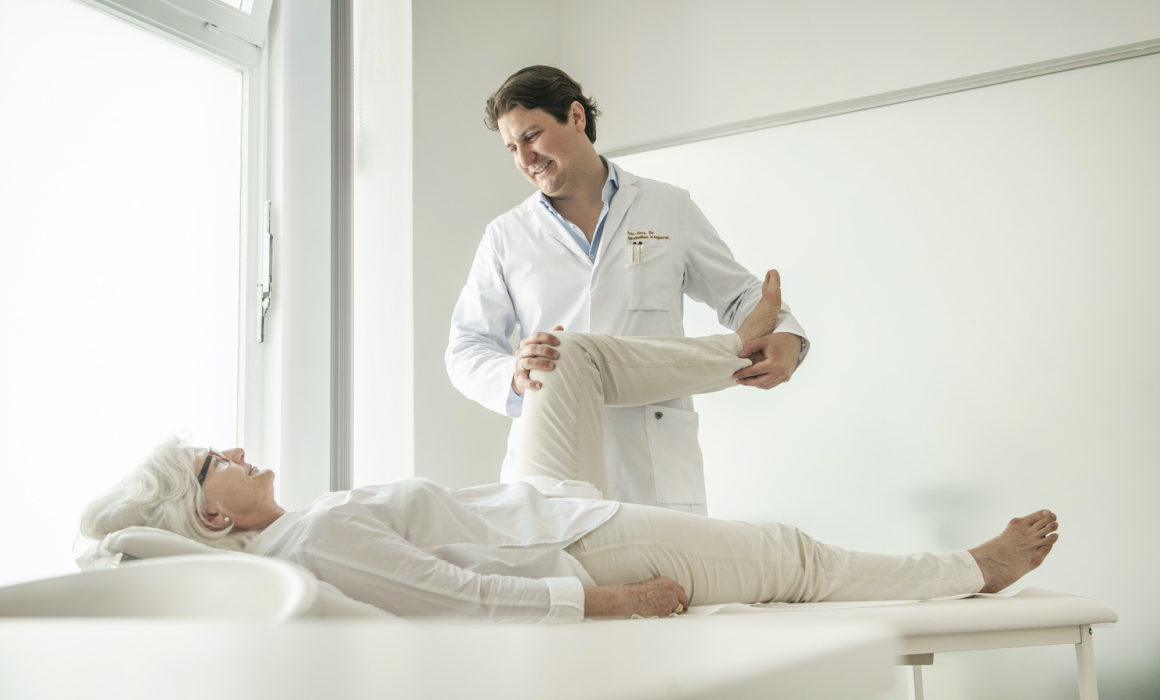
In my private practice in Vienna, we examine your knee in a targeted manner and plan further therapy – whether conservative or surgical.
If you enjoyed this article, you might also be interested in other posts from our blog.